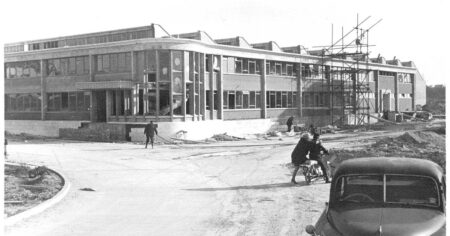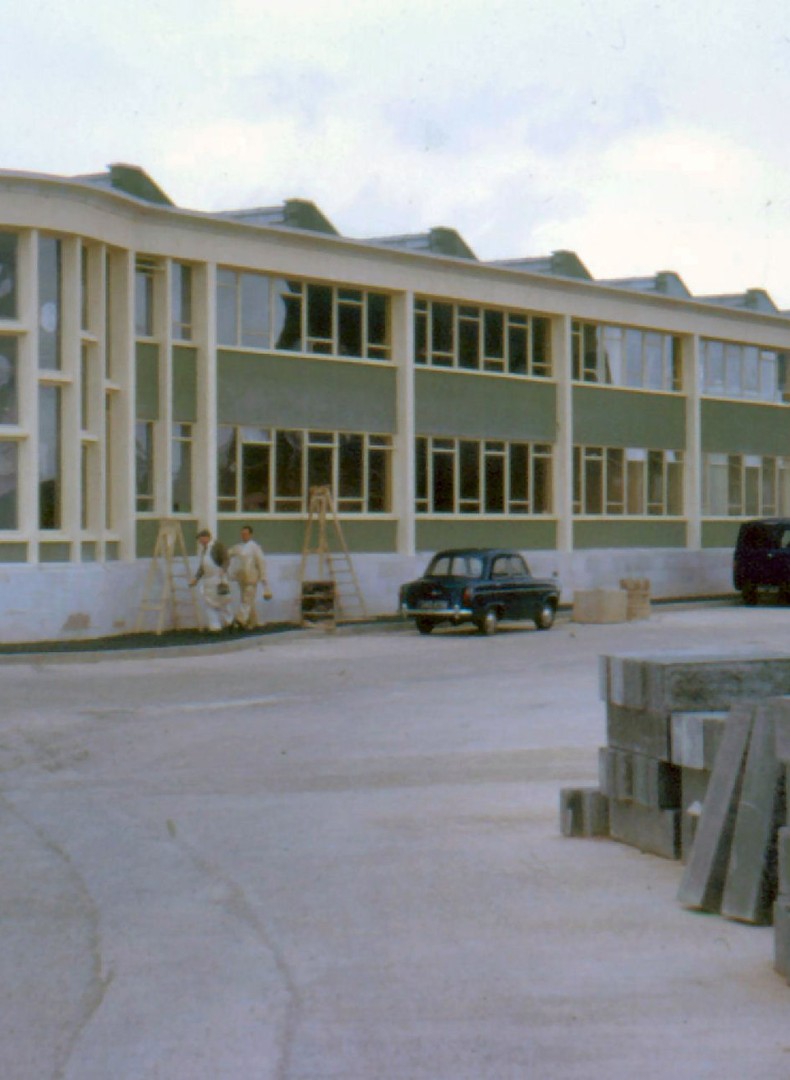
When Edward Heath opened a £300,000 factory on the Westwood Industrial Estate in Margate on 17th July 1964, few could have imagined the extraordinary journey that site would take over the next six decades.
We recently uncovered the original press release from the Borough of Margate Publicity Department, dated 13th July 1964, announcing the official opening of the new Hilger and Watts Ltd. Thanet Factory. It’s a remarkable piece of local history — and the very first chapter in the story of what we now know as Engine Works Park.
The Original Press Release
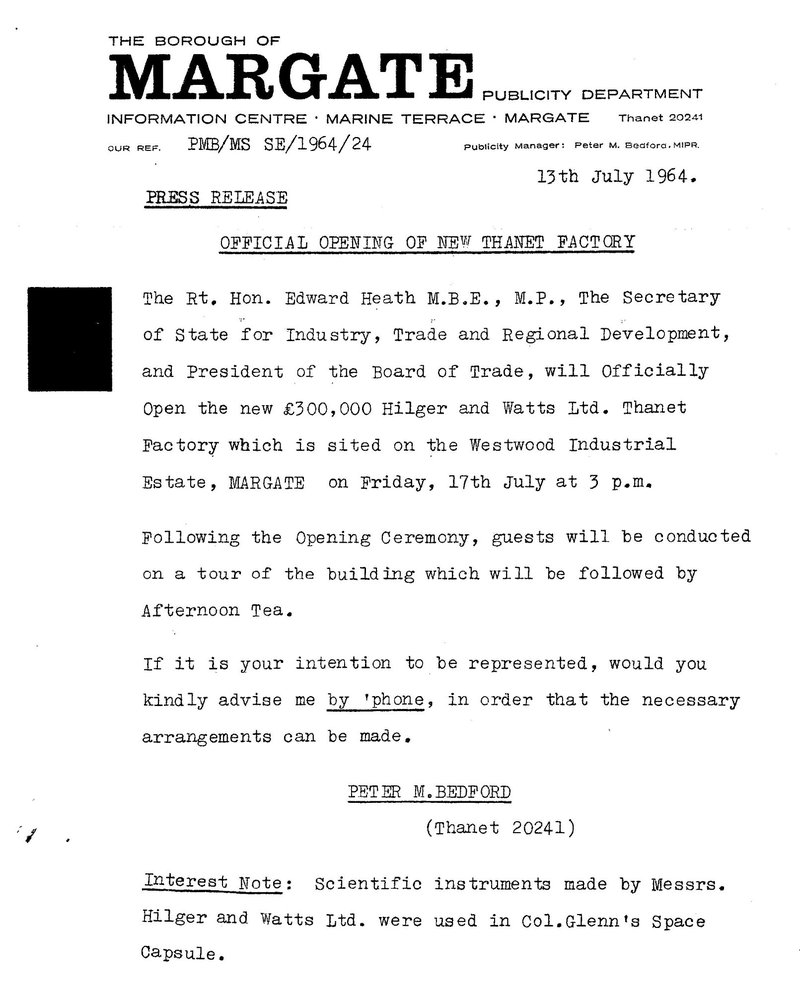
The press release, issued by Publicity Manager Peter M. Bedford, announced that the Rt. Hon. Edward Heath M.B.E., M.P. — then Secretary of State for Industry, Trade and Regional Development, and President of the Board of Trade — would officially open the new factory on Friday, 17th July at 3 p.m. Heath, of course, would go on to become Prime Minister of the United Kingdom in 1970.
Perhaps the most fascinating detail is the footnote: “Scientific instruments made by Messrs. Hilger and Watts Ltd. were used in Col. Glenn’s Space Capsule.” The factory that would eventually become Engine Works Park had its origins in the space race — the instruments crafted within its walls helped send astronaut John Glenn into orbit aboard Friendship 7 in February 1962.
Building the Factory: Never-Before-Seen Photos
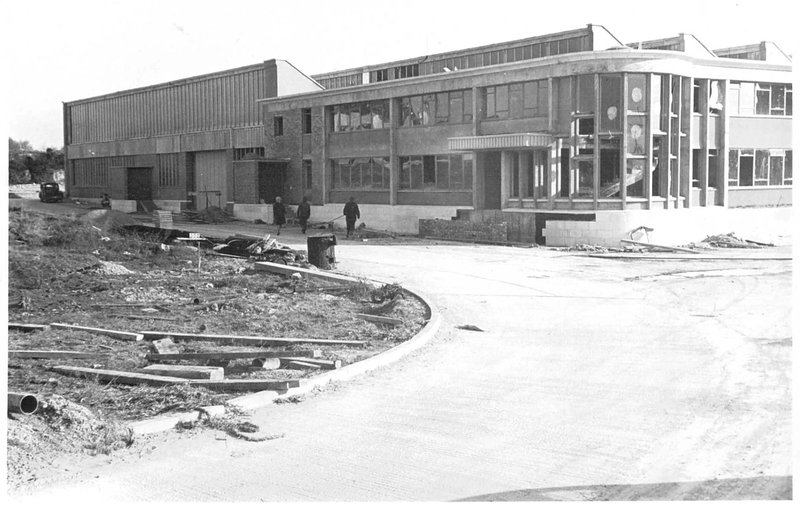
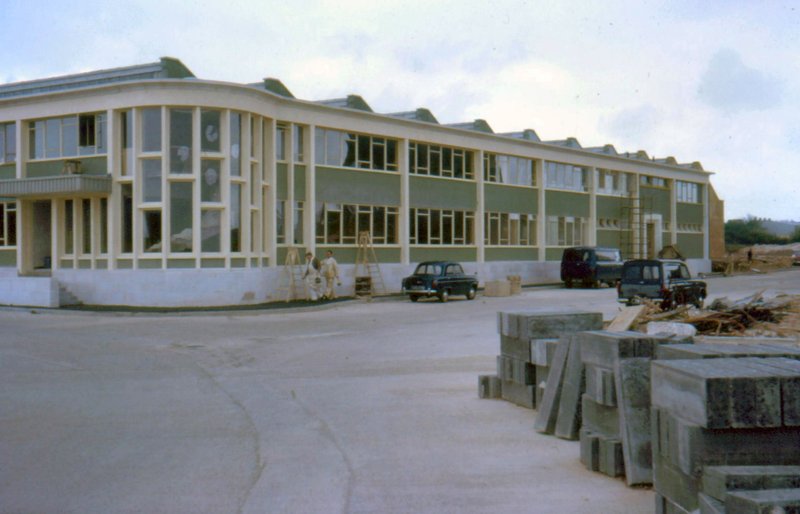
These extraordinary photographs, taken during the construction of the original factory in the early 1960s, show the scale and ambition of the project from the very beginning. The site on Westwood Industrial Estate was transformed from open land into a state-of-the-art manufacturing facility.
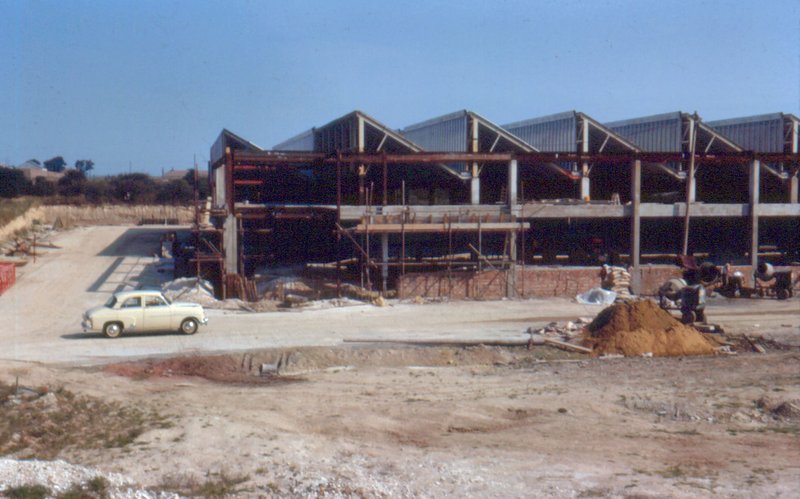
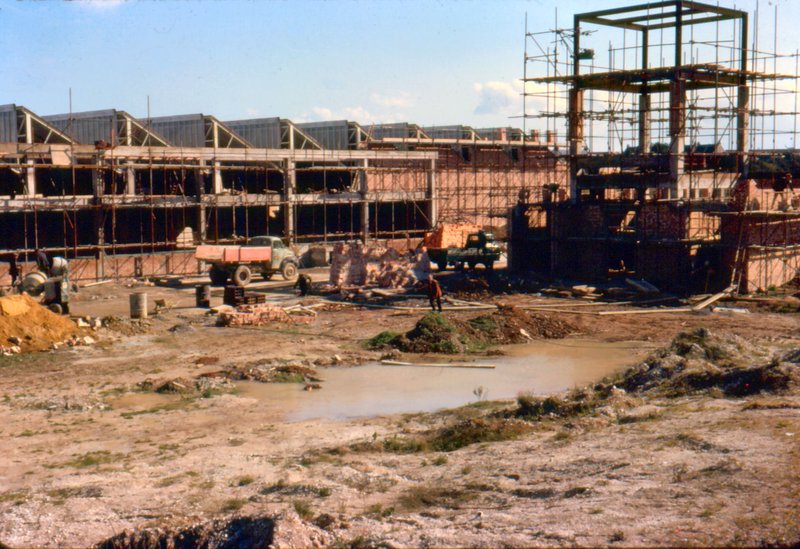
The construction photographs capture a moment in time when British manufacturing was expanding and Thanet was positioning itself as a hub for precision engineering. The £300,000 investment — equivalent to roughly £7 million in today’s money — represented a major commitment to the region.
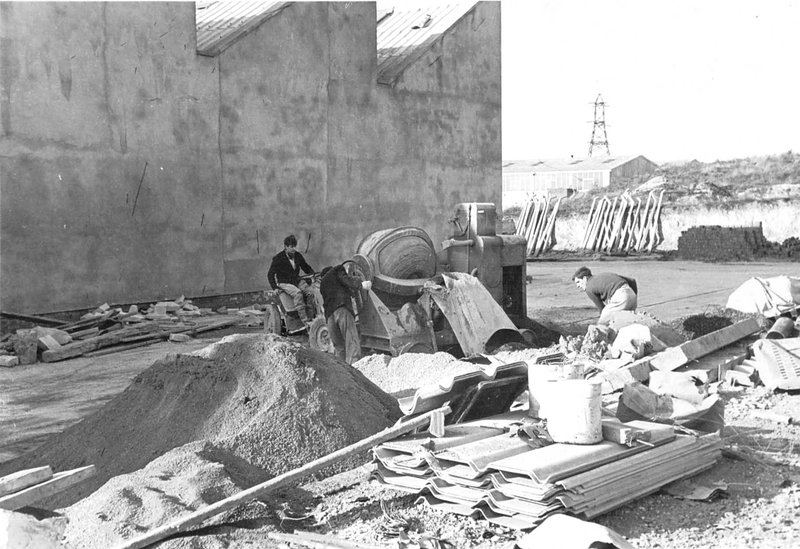
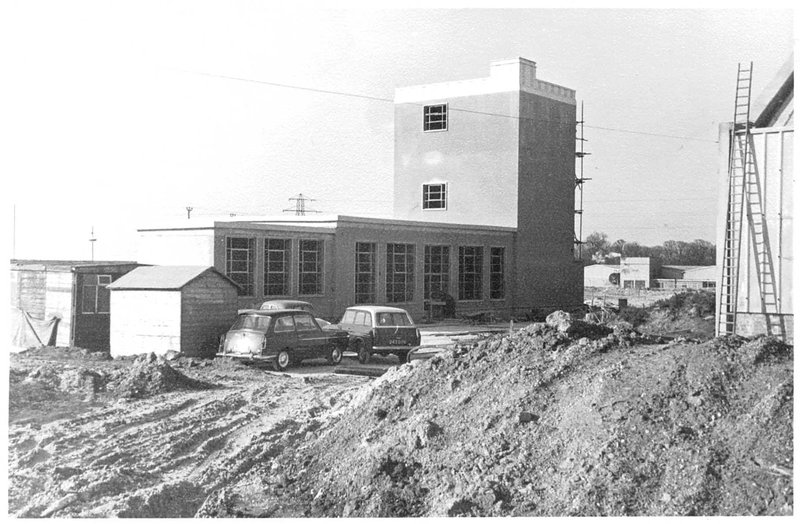
Taking Shape
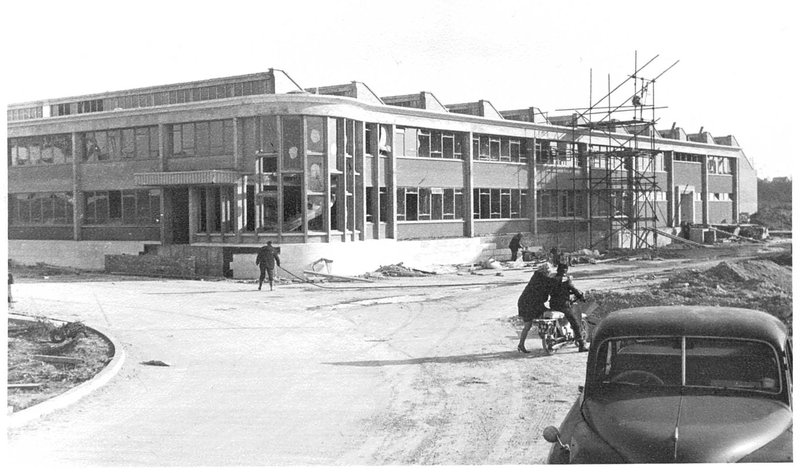
As construction progressed, the distinctive curved frontage of the main building began to emerge — an architectural feature that spoke to the optimism and modernist ambitions of 1960s British industry.
A Site with Many Lives
Hilger and Watts — renowned for their optical and scientific instruments — operated from the site for many years before it eventually became home to Cummins Power Generation, the diesel engine manufacturer that gave Engine Works Park its name. Cummins employed around 600 people at the site at its peak, before operations were gradually moved overseas between 2016 and 2019.
After years of decline and a devastating fire in September 2018 — which burned for 25 days and required 80 firefighters to bring under control — the site lay derelict. That is, until Yeats Group, together with equity partner Nimol, acquired the land and began the ambitious redevelopment now known as Engine Works Park.
Today, as steel rises once again on the Westwood Industrial Estate, there’s a pleasing symmetry with these 1960s construction photographs. The same spirit of ambition, investment, and belief in Thanet’s potential that drove the original factory is now powering a new generation of industrial and logistics space for the region.
From space capsule instruments to diesel engines, from dereliction to regeneration — the story of this remarkable site continues to unfold. And it all started with that press release, sixty-two years ago.