Every great development has a story. Ours begins in 1962, on a patch of Kent farmland that would spend the next six decades powering industry across the globe — before falling silent, catching fire, and rising again as something entirely new.
When people ask why we called it Engine Works Park, the answer isn’t a branding exercise dreamed up in a marketing meeting. It’s a tribute. The site where 59 premium commercial units are now taking shape at Westwood Industrial Estate was, for decades, home to one of Kent’s most significant industrial operations — a Cummins engine factory that at its peak employed 600 people and occupied a staggering one million square feet.
1962: Where It All Started
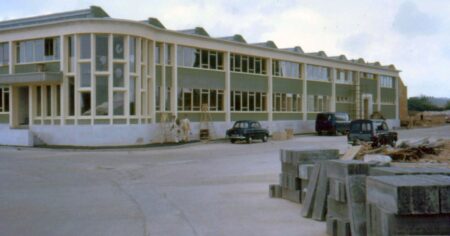
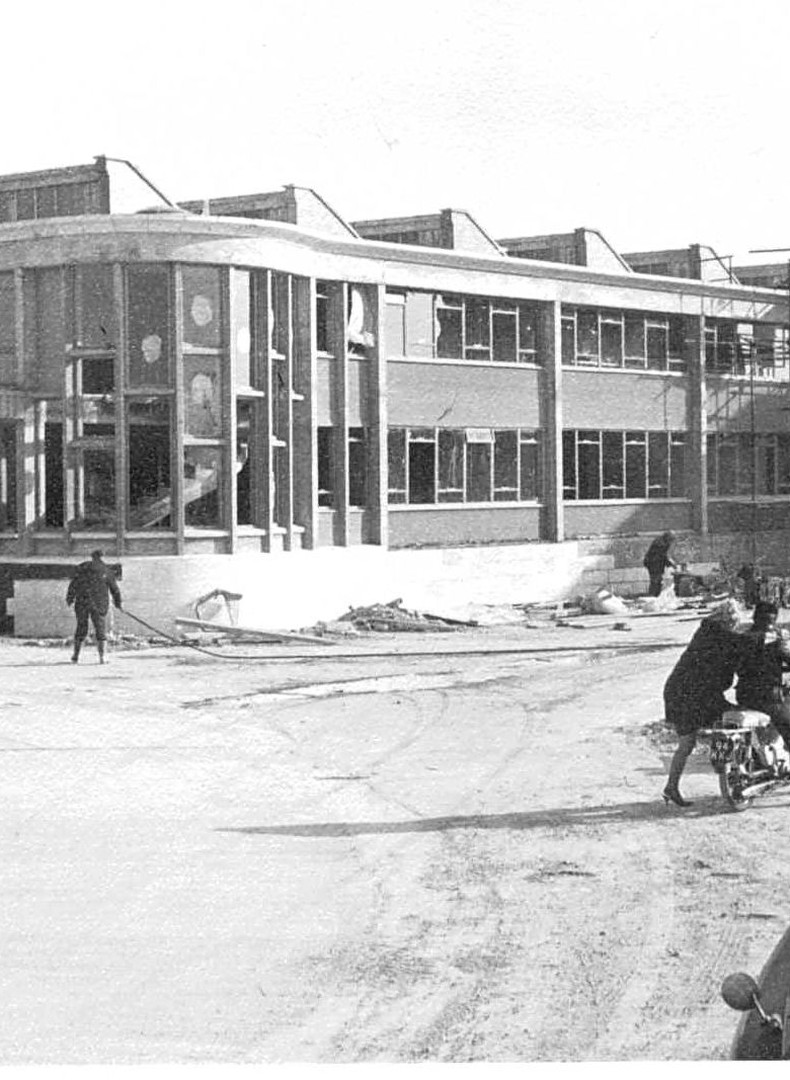
The story begins in the early 1960s, when the original factory was built on what is now Continental Approach. Thanet’s Westwood area had been earmarked for industrial use since the 1920s, and after the Second World War, the government designated it as a supported industrial zone. By the time the factory opened in 1962, the estate was already home to manufacturers like Hornby Hobbies and the Klinger Manufacturing Company — but this new facility would become the area’s industrial centrepiece.
The factory was purpose-built for heavy engineering and power generation — a vast complex of production lines, testing bays, and distribution warehouses that would grow to become one of the largest manufacturing sites in the South East of England.
The Cummins Years
Cummins Inc., the American diesel engine giant founded in Columbus, Indiana in 1919, had been expanding aggressively across the UK since the 1950s. Their first facility outside the United States opened in Shotts, Scotland in 1956, followed by Darlington in 1965 and Daventry in the early 1970s. The Thanet operation became a critical node in this network — Cummins Power Generation’s Kent facility manufactured and tested diesel generator sets for markets spanning power generation, marine, rail, and mining sectors worldwide.
For the local community, the factory was more than just a building. It was livelihoods. At its height, around 600 people walked through those gates every day — engineers, welders, assembly line workers, logistics staff, quality controllers. The factory was a cornerstone of Thanet’s economy, and for many families in Margate, Ramsgate, and Broadstairs, it was the reason they could stay and work locally rather than commuting to London or beyond.
By the mid-2000s, Cummins Power Generation’s Thanet operation was turning over more than £400 million annually — a remarkable figure for a single site in East Kent. The company was a major employer, a significant contributor to the local supply chain, and a source of skilled engineering jobs that are notoriously hard to find in coastal towns.
The Decline
But global economics have a way of catching up with even the most established operations. By 2016, weakening worldwide demand for power generation equipment forced Cummins to make difficult decisions. Manufacturing operations at the Kent site were wound down and relocated to Daventry, India, and China. Some 150 production line workers lost their jobs immediately, with the site gradually transitioning into a reduced-footprint distribution and logistics hub.
Eventually, Cummins relocated its remaining 200-strong engineering team to Discovery Park in Sandwich, and the vast factory complex at Westwood fell silent. The building that had hummed with diesel engines for over half a century stood empty.
The Fire
What happened next was a low point in the site’s history. With the factory vacant, the building became a target. Illegally stored waste — approximately 16,000 bales of it — was dumped inside the former Cummins unit without any licence from the Environment Agency. Enforcement notices were ignored.
On Saturday 15th September 2018, fire broke out. It burned for 25 days. At its height, 80 firefighters were deployed, and thick plumes of smoke could be seen as far away as Sandwich. The blaze cost Kent Fire and Rescue Service £161,000 in additional spending. By the time crews were finally stood down on 10th October, the building was gutted.
The charred remains sat untouched for two years. A proud industrial site — one that had been the beating heart of local employment for decades — had become an eyesore and a symbol of neglect.
A New Chapter
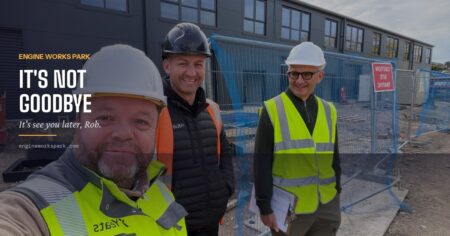
When Yeats acquired the site, the vision was clear from the start. This wasn’t about erasing history — it was about honouring it. The name Engine Works Park is a deliberate nod to the generations of workers who built engines on this ground, to the industrial heritage that gave Westwood its identity, and to the idea that making things, building things, and powering things forward is what this corner of Kent has always been about.
Thanet District Council granted planning permission for the redevelopment, and construction commenced in January 2025. Working with equity partner Nimol and principal contractor South East Steel, Yeats designed 59 purpose-built commercial units across approximately 126,000 square feet — a scheme specifically tailored to support the next generation of businesses in Thanet.
The units are designed for flexibility: split-level layouts that work for e-commerce fulfilment, light manufacturing, tech operations, professional services, and trade businesses. Super-fast broadband, three-phase electricity, solar PV panels, and electric vehicle charging reflect the fact that while the name looks backwards, the buildings look firmly forwards.
From Diesel Engines to Digital Enterprise
There’s a pleasing symmetry to the story. In 1962, the original factory was built to serve the industries of its era — heavy diesel, power generation, global manufacturing. In 2026, Engine Works Park opens to serve the industries of ours — logistics, e-commerce, sustainable tech, and the creative and digital sectors that are transforming Margate’s economy.
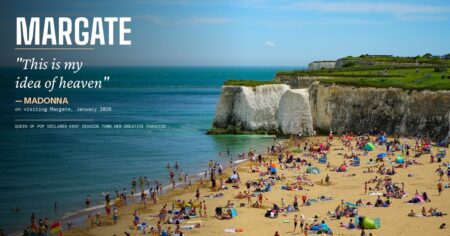
The high-speed rail link from nearby Thanet Parkway now puts London just 70 minutes away. Westwood Cross, one of Kent’s largest retail destinations, is a short walk from the site. And Margate itself — once written off, now thriving with investment, culture, and a growing reputation as one of the South East’s most exciting regeneration stories — provides the perfect backdrop.
So when you see the name Engine Works Park, know that it isn’t just a name. It’s a 64-year story of industry, employment, decline, destruction, and rebirth. It’s a site that has always powered something — and now it’s ready to power the next chapter.
Engine Works Park: units available from Spring 2026. Register your interest at engineworkspark.com or contact the Yeats team directly.